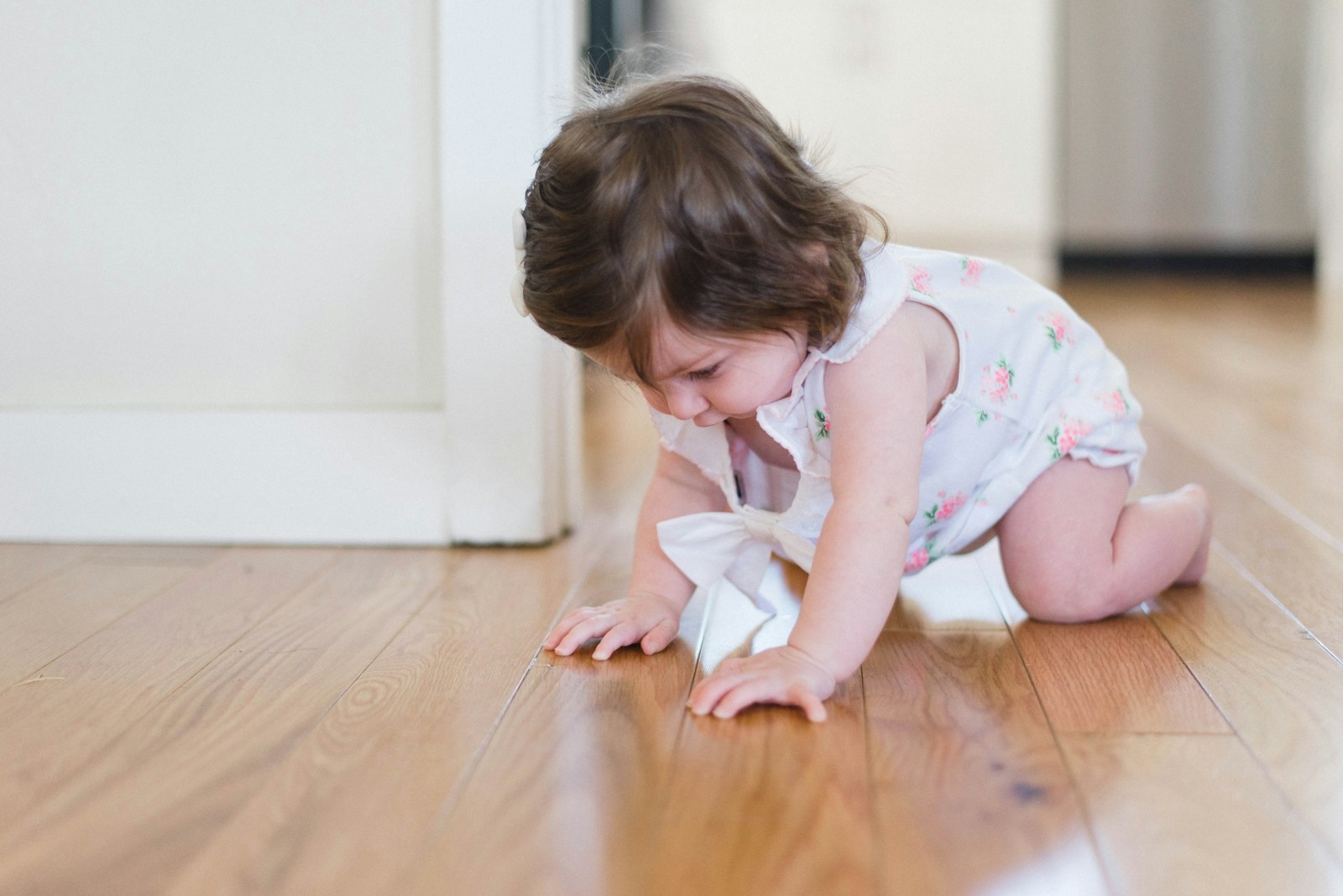
A baby’s motor development is a fascinating and continuous process. Among the most iconic milestones is crawling: that moment when the baby begins to move on their hands and knees, exploring their surroundings with greater freedom. Although every baby has their own pace, understanding why crawling is valuable and when medical assessment might be needed can help you better support your child.
Why is it important for a baby to crawl?
Crawling is not just a physical achievement; it is a key stage where multiple developmental systems converge.
🧠 Neurological and Brain Development
Crawling involves coordination between arms, legs, eyes, and head. This cross-lateral pattern (for example, right hand with left knee) strengthens neural connections important for future functions such as:
-
Fine and gross motor coordination
-
Spatial awareness and laterality
-
Development of complex cognitive skills
The American Academy of Pediatrics (AAP) and other organisations point out that free movement and exploration promote the sensorimotor maturation of the brain.
💪 Strengthening the Body and Posture
By crawling, the baby:
-
Strengthens the core, shoulders, and hips
-
Improves spinal stability
-
Learns to work on bilateral coordination
This strengthening provides an important foundation for later stages, such as standing up or walking.
👀 Vision and Spatial Perception
Crawling favours visuomotor integration: the ability to coordinate what the eyes see with what the body does. This is key for later tasks such as writing, tying shoelaces, or playing with blocks.
📚 Exploration and Learning
Crawling allows the baby to actively discover their environment. This early exploration influences emotional development (confidence, initiative) and curiosity—a fundamental engine for learning.
When does crawling usually appear?
Although every baby is unique, there are expected windows:
-
8–10 months: Many babies begin to attempt crawling.
-
9–12 months: Most crawl consistently.
Some babies may skip crawling and move directly to standing or walking. It is important to emphasise that there is no single “correct” pace, but there are signs that can guide you regarding motor development.
Variations in crawling: Is skipping it a cause for concern?
It is important to know that there is no single correct type of crawling. Many forms of movement are part of typical development, as long as the baby progresses and explores their environment. Some normal variations include:
-
Belly crawling (commando crawling) with the abdomen supported on the floor.
-
Bottom shuffling using hands and glutes.
-
Temporary asymmetrical crawling (using one side more at the start).
-
Skipping the classic crawl and moving straight to standing or walking.
These variations are usually not a problem if the baby shows curiosity, attempts to move, changes posture, and improves over time.
Red flags to consult a professional
It is advisable to consult a professional if you observe any of the following situations:
-
Constant use of only one side of the body without alternation.
-
Excessive stiffness or, conversely, marked floppiness.
-
Absence of any attempts to move around by 10–12 months.
-
Difficulty supporting weight on arms or legs.
-
Lack of progress in movement over several weeks.
These signs do not necessarily mean there is a serious problem, but they do warrant a specialised assessment.
What can a paediatric physiotherapist do?
A paediatric physiotherapist evaluates the baby’s motor development globally, observing posture, muscle tone, coordination, and spontaneous movement. From there, they can:
-
Detect if development falls within the normal range.
-
Propose exercises and games adapted to the baby’s age.
-
Guide parents on how to encourage movement at home.
-
Prevent future motor difficulties if necessary.
When crawling is just another stage
It is important to remember that crawling is not an end in itself, but rather a step within a continuous process. Some children:
-
Do not crawl traditionally but walk appropriately.
-
Use other effective movement patterns.
-
Reach milestones later without lasting consequences.
The key is to observe general progression, where the baby:
✔ Responds to the environment
✔ Interacts with people
✔ Shows curiosity about moving
✔ Gradually increases postural control over time
If these factors are present, development is usually on the right track.
Conclusion
Crawling is an important stage that supports a baby’s motor, neurological, and cognitive development. It can provide a solid foundation for later skills such as walking, running, and manipulating objects with precision. Although not all babies crawl in the classic way, providing opportunities for movement and encouraging exploration can be very beneficial.
If you notice any red flags or have doubts, consulting a healthcare professional—such as your GP or a paediatric physiotherapist—will give you peace of mind and can help your baby reach their full potential.
Recommended Bibliography
-
American Academy of Pediatrics (AAP). Policy Statement on Early Motor Development and Screening. AAP Publications, 2019.
-
World Health Organization (WHO). WHO Motor Development Study: Windows of Achievement for Gross Motor Development. Geneva: WHO Press, 2006.
-
Bly LM, et al. “Promoting Motor Development in Infants: Evidence and Recommendations.” Pediatrics, 2018.
-
Shumway-Cook A, Woollacott MH. Motor Control: Translating Research into Clinical Practice. 5th Ed. Lippincott Williams & Wilkins, 2016.